
Controlled environments for biotechnology and research
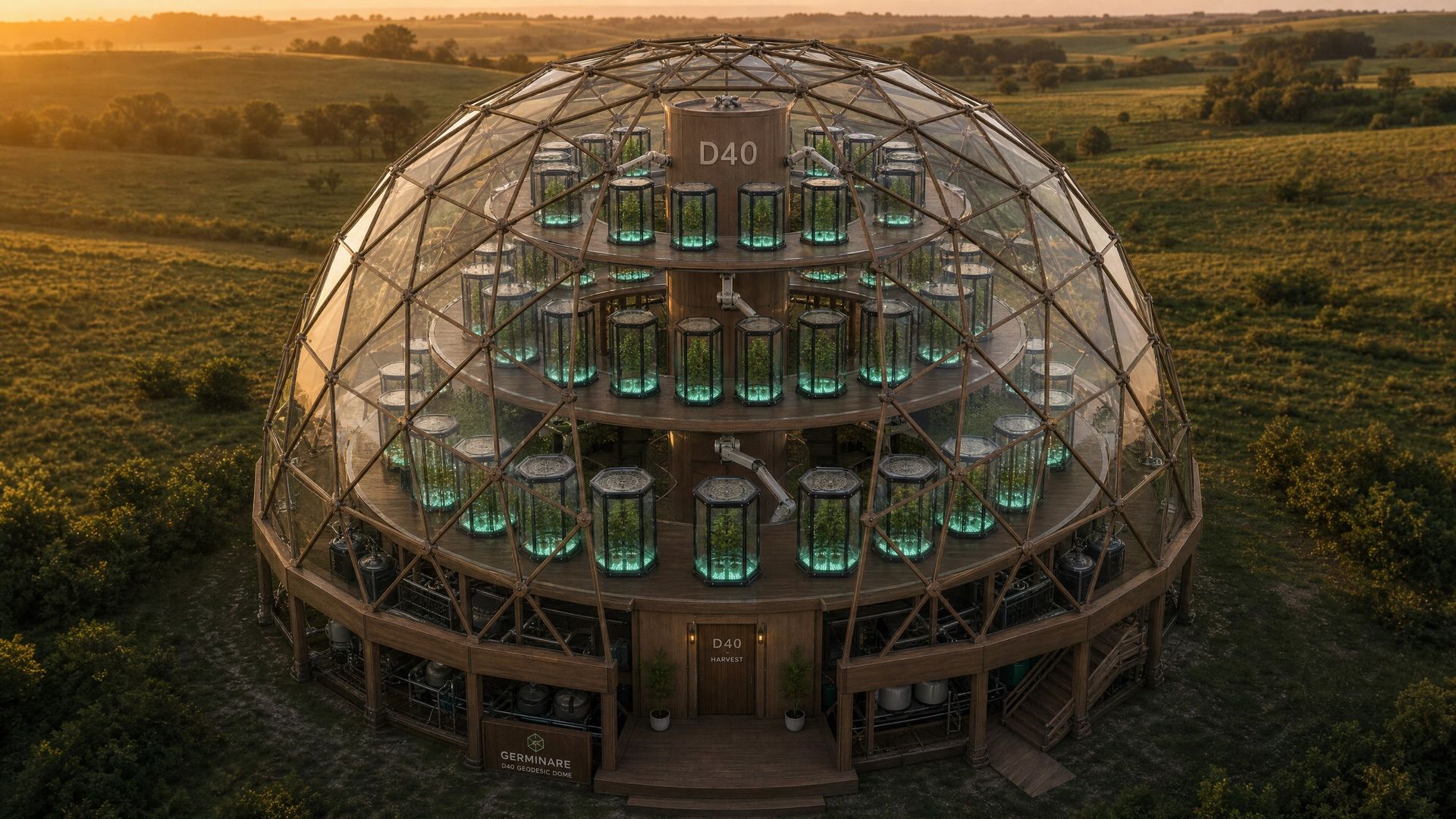
Germinare AI designs automated geodesic domes where plants grow under measured conditions, watched by sensors and cameras, with a record of everything that happens to them.
Concept illustration of the D40 dome.
Our purpose
Biology is hard to repeat outdoors. Weather, soil, pests and handling change from one season to the next, and with them the plant.
Our purpose is to give scientists and producers a place where those variables are set, measured and recorded, so that a result obtained once can be obtained again.
What we are building
The dome is the enclosure. The technology is what works inside it.
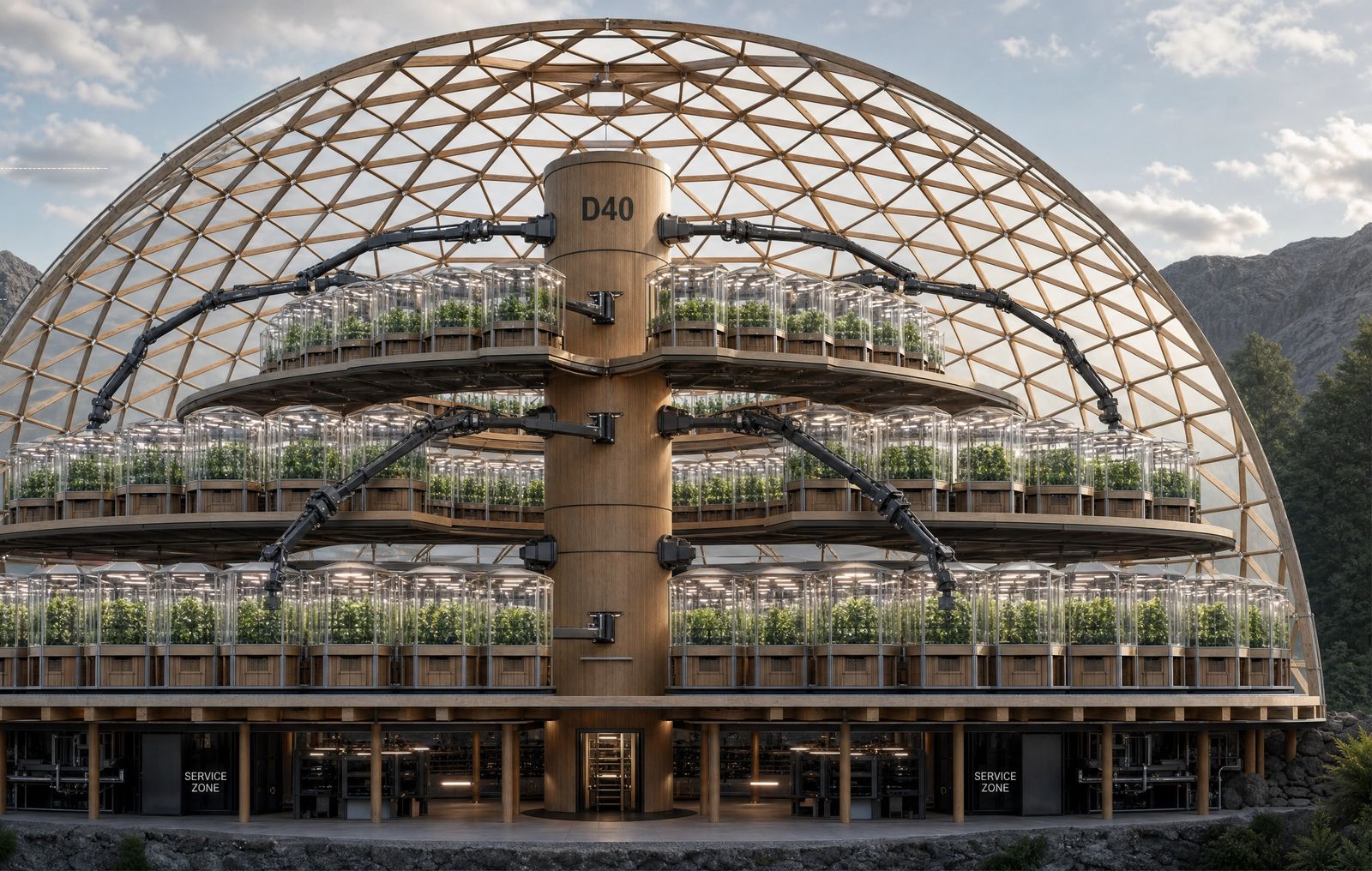
- A timber geodesic structure
- An engineered-wood dome, cut by CNC and assembled from repeatable parts, raised above a service level that keeps equipment out of the growing space.
- Modular growing units
- Enclosed hexagonal units that fit together like a honeycomb. Each one carries its own light, root-zone supply and sensors, and can be moved as a single piece.
- Monitoring without entry
- Visible and near-infrared cameras and environmental sensors follow every unit, so plants can be observed without people walking in.
- Automation we develop ourselves
- Control electronics, software and robotic handling designed in-house, so the whole system can be maintained, adapted and improved by the people who run it.
- A record for every batch
- Conditions, events and handling are designed to be logged as verifiable records that can be exported for audits and research.
Who it is for
Any work where plants are the instrument and repeatability matters.
Plant biotechnology
Growing plant lines that need isolation and steady conditions.
Research institutions
Controlled capacity for universities and laboratories.
Pharmaceutical ingredients
Plant-based raw materials with a documented history.
Seeds and genetics
Variety development under conditions that can be reproduced.
Sensing and materials
A test bed for imaging, sensors and new materials.
Food resilience
Year-round growing where climate or land make it difficult.
Built with local timber, on land farming does not need
The domes are designed around engineered wood from local forestry and for sites with little agricultural value, so they add productive capacity without competing with farmland.
Efficient use of energy and water is a design goal from the first drawing.
Talk to us
If your work depends on controlled, well-documented plant growth, we would like to hear about it.